AI marketing automation for paid and demand gen: what to give a model and what to keep as a rule
A decision rule for which demand gen automation jobs go to a model, which stay as rules, and how lead quality flows back to Google, Meta and LinkedIn.

AI marketing automation is marketing automation where a model makes some of the decisions a fixed rule used to make: classifying a lead, writing a follow-up, or choosing the next step. For paid and demand gen teams, it pays off between the ad click and the sales conversation, while anything that moves budget stays with rules and people.
You've probably had a version of this conversation at a renewal. Your marketing automation platform now ships agents, the invoice has a new line for AI credits, and someone in finance wants to know what those credits did. An imagined but familiar exchange: the CFO asks what the AI in HubSpot delivered last quarter, and the honest answer is that it summarized a lot of contact records.
This guide is for the CMO or head of demand gen deciding where AI belongs in the automation stack. It gives you a plain split between rules, models and agents, one decision rule for placing each job, the platform features that exist as of November 2026, and the loop back to the ad platforms that most automation projects forget. Scalewell works with demand gen teams on this placement, so each job lands with the right owner and its results flow back to the ad platforms where they shape bidding.
Rules, models and agents do three different jobs
Rules-based automation follows if-then logic that a person wrote, and it does exactly the same thing every time. That's the workflow that assigns a lead to an owner, sends the welcome email, or pauses a campaign when spend crosses a line. Rules are cheap, predictable and auditable, and they break the moment reality stops matching the condition someone wrote two years ago.
AI adds two other kinds of worker. A model classifies, predicts or writes: it reads a job title and decides the persona, estimates how likely a contact is to buy, or drafts a nurture email. An agent goes further, planning several steps and taking actions in your systems with some freedom over how it gets there.
| Layer | What it does | Paid and demand gen example | How it usually fails |
|---|---|---|---|
| Rule | Runs a written condition the same way every time | Route every LinkedIn lead from a target account to its owner | Silently misfires when inputs change |
| Model, classifying or predicting | Labels or scores records | Tag free-text job titles into buying committee roles | Confident wrong labels nobody samples |
| Model, generating | Writes text or content | Draft a follow-up for a webinar no-show | Invented claims, off-brand tone |
| Agent | Plans steps and acts within limits | Research an account, find contacts, draft outreach | Takes a reasonable action on the wrong goal |
The classifying layer is the most underrated. A 2023 study by Gilardi, Alizadeh and Kubli found that ChatGPT's zero-shot accuracy exceeded that of crowd workers on four of five text annotation tasks, at under $0.003 per annotation. Labeling leads, form answers and search terms is similar work, so this is where a model earns its keep with the least drama.
Agents need more care. In the Harvard Business School and BCG field experiment with 758 consultants, people using AI on tasks inside its capability completed 12% more work, 25% faster, at 40% higher quality, but on a task outside it they were 19 percentage points less likely to reach the right answer. An agent that plans its own steps will sometimes wander outside that line without telling you.
Place each job by its first reader and how easily it reverses
The amount of freedom a model gets should depend on two questions: who or what sees its output before anyone can catch a mistake, and how hard that mistake is to undo. This guide calls that pair the first-reader test, a label of our own for this article. We'd use it as the single test for every automation on your list.
| First reader | Example output | Who decides | Review level |
|---|---|---|---|
| A system | Persona tag, lead score, routing queue | Model can run | Weekly sample of outputs |
| A colleague | Account summary for a sales rep, weekly digest | Model can run | Colleague flags errors as they go |
| A buyer | Nurture email, chat reply, outreach message | Model drafts | Approved templates or human approval |
| An ad platform with money attached | Budget change, bid change, campaign pause | Rule or person | Rule with limits, person approves anything new |
So a model can tag every inbound lead with no one approving each tag, because a system reads it first and a wrong tag is easy to fix. A generated email to a prospect is the opposite case: the buyer is the first reader, and an email can't be unsent. Budget sits in its own row because a model's mistake there is paid for in real money before anyone notices, which is why the human checkpoints on ad spend belong in the design from day one.
Is this slower than letting an agent run the lot? At first, yes. But it's how you get to a place where the CFO question has an answer.
AI belongs between the ad click and the sales conversation
The stretch from form fill to first sales touch is where demand gen automation does most of its work, and most of that work is reading and sorting. Here is how the first-reader test plays out across a typical B2B paid funnel, with features checked against vendor documentation in November 2026.
| Job | Layer | What exists today | First reader |
|---|---|---|---|
| Capture leads from paid forms | Rule | HubSpot's LinkedIn Ads connection syncs leads, on all plans | System |
| Clean and classify fields | Model | HubSpot Data Agent custom prompt action (beta) to categorize records | System |
| Route to the right owner | Rule, fed by model labels | HubSpot "Rotate record to owner" action, Sales Hub or Service Hub Professional and up | System |
| Score likelihood to buy | Model | HubSpot likelihood to close score, Enterprise tiers | System |
| Write nurture and follow-up | Model drafts | HubSpot Summarize record can draft marketing email content on Marketing Hub Enterprise | Buyer |
| Engage inbound buyers in real time | Agent | Salesforce's Piper AI SDR, from its acquisition of Qualified | Buyer |
| Research accounts, build lists and draft outreach | Agent | HubSpot Prospecting agent, Salesforce Hunter | Colleague, then buyer |
| Pause or adjust campaigns | Rule | Google Ads automated rules, Meta ad rules engine | Ad platform |
Routing is the clearest example of the two layers working together. A rule should still do the assigning, because sales leaders need to know exactly why a lead landed with a rep. The model's job is to supply the inputs the rule could never read, such as turning "Head of Rev Ops, EMEA" into a role and region your routing logic understands.
Scoring has its own guide, so we won't repeat it here. If you're weighing a predictive model against a points table, our article on AI lead scoring for demand gen covers the data you need first and the vendor minimums.
The ad ops row is deliberately rule-based. Google's automated rules can change ad status, budgets and bids and send emails when conditions occur, and Meta's ad rules engine runs rules on a schedule or on triggers as ad data changes. Neither needs a model to decide, and a model's best use there is explaining why a rule fired. For the operations jobs around that, such as naming and tracking checks, see AI for marketing operations.
The loop back to the ad platforms is where paid sees the return
The ad platforms optimize toward whatever outcomes you send them, so the decisions your automation stack makes about lead quality only change paid results once they flow back. Most marketing automation projects stop at the CRM. That leaves Google, Meta and LinkedIn bidding for form fills while your scoring model quietly knows which ones sales wanted.
All three platforms now accept those downstream signals, each with its own conditions:
| Platform | Feature | Conditions in the documentation |
|---|---|---|
| Google Ads | Enhanced conversions for leads | Import hashed lead data from your CRM when a lead converts, to improve accuracy and bidding |
| Meta | Conversion Leads optimization | Instant Forms only; at least 200 leads a month; target stage within 28 days of the lead, converting at 1% to 40%; daily uploads; 2 to 4 weeks of learning |
| Qualified leads optimization goal | Lead generation objective; Conversions API conversion rule with the type QUALIFIED_LEAD; data shared within 30 days; five or more qualified leads in two weeks recommended for the learning phase |
If most of your paid leads come from LinkedIn Lead Gen Forms, set up LinkedIn's loop first. Once qualified leads stream back, Campaign Manager reports qualifiedLeads and costPerQualifiedLead against your ads, which gives you a platform metric that finally resembles what sales cares about.
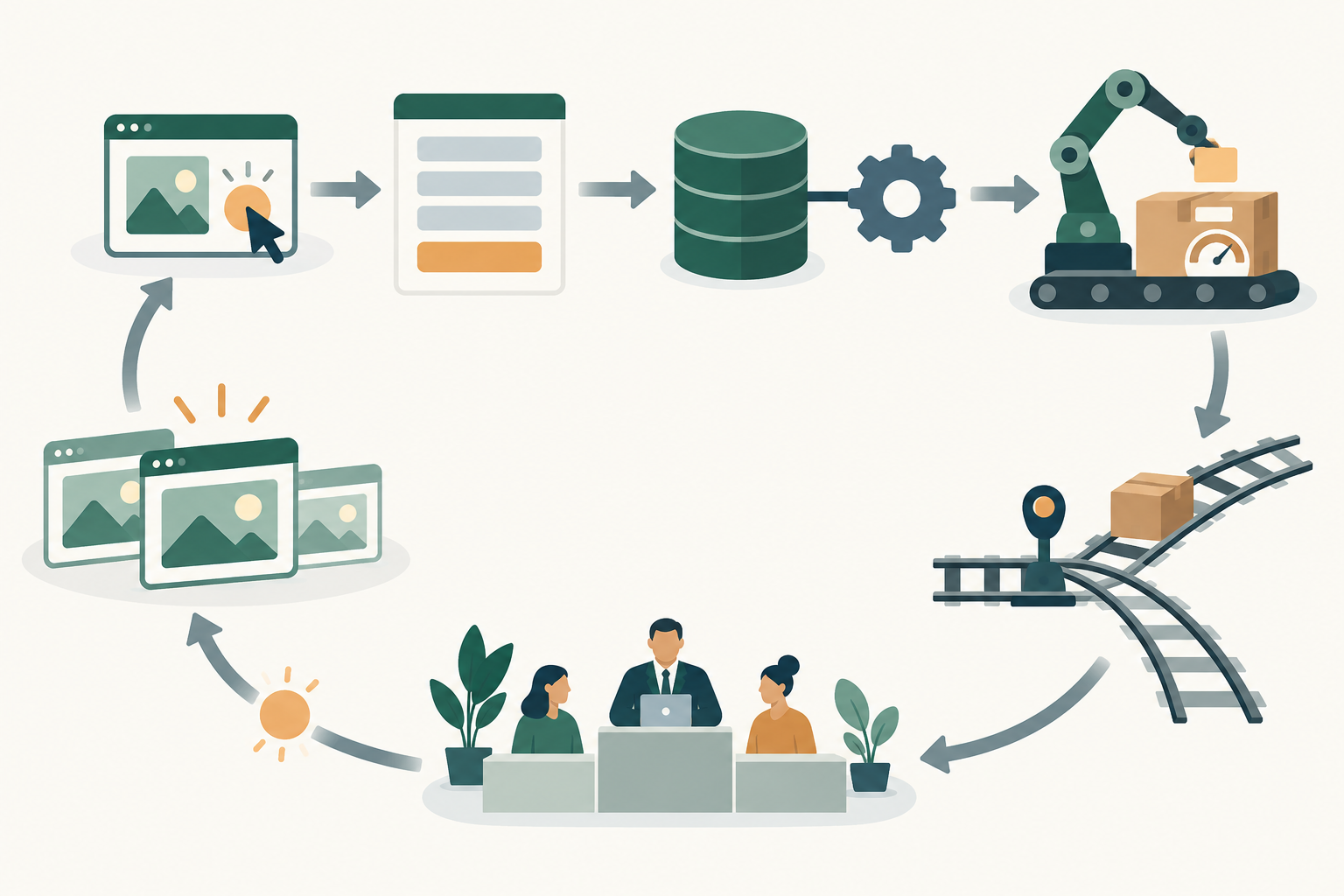
Platform AI features as of November 2026
HubSpot and Salesforce both now sell AI in their automation tools as a mix of workflow actions and named agents, and the details differ enough to matter for budgeting.
HubSpot. HubSpot's list of workflow actions includes an AI section, and HubSpot Credits are required to use AI workflow actions. Most of them are labeled beta, including the Data Agent custom prompt, research and smart property actions, record summaries, and a "Use a custom LLM" action that connects workflows to other model providers. There is also a "Run Agent" action, and the prospecting agent actions need Sales Hub Professional or Enterprise. HubSpot's agent page names a Customer agent, Prospecting agent, Data agent and Breeze Assistant, and says credits are consumed every time you run a custom agent. The likelihood to close score estimates the probability that a contact becomes a customer within 90 days, and needs Marketing Hub or Sales Hub Enterprise.
Salesforce. Salesforce describes its Campaign Agent as working "within guardrails you set" to create, run and optimize campaigns, with "reviews and approvals built in along the way." Its demand generation page lists Hunter, a prospecting agent that builds target lists from CRM and intent data, Piper, an AI SDR for inbound buyers that came with the Qualified acquisition, Agentforce SDR for outbound, and an Account Discovery Agent that looks for missing buying group members.
Read these pages as descriptions of what the vendors sell, because that's what they are. Neither publishes independent results for these agents on the pages we checked, so judge them on a pilot in your own funnel.
Most teams use AI and very few run agents
Use of AI in marketing is close to universal, while agents remain a small minority. HubSpot's 2026 State of Marketing report, from over 1,500 marketers, found 86.4% of teams use AI in at least a few areas, but only 34.1% use it extensively for advertising automation and optimization. Salesforce's tenth State of Marketing report, from 4,450 marketers, found 75% using AI but only 13% using agentic AI.
The Salesforce figure that matters most for automation is a different one: only 26% of marketers are completely satisfied with their data unification. A model routing leads on fields that disagree across systems will route them wrongly, faster. So if your lifecycle stages mean different things in the CRM and in the ad platforms, fix that before you buy agent credits.
Governance comes down to four written decisions
Governance for AI marketing automation means deciding in writing who owns each automation, what it may change, how it's checked and how it's stopped. It sounds like paperwork, and it is, but it's a page of paperwork per automation, and it's what lets you say yes to the next one.
- Name an owner for every automation. One person answers for each workflow, model or agent, including the ones a vendor switched on for you.
- Write down what each one may change. List the fields, records and systems it can write to, and keep budget and bids out of reach of any model.
- Set a sample and a log. Pick how many outputs a person checks each week, and keep a record of what the automation did and why.
- Keep a way to stop it. Every rule and agent needs an off switch someone can find in a hurry; Meta's ad rules, for example, can be set to
DISABLEDand turned back on later.
Add a credits budget to the list if you're on HubSpot. HubSpot says credits are consumed every time you run a custom agent, so an agent enrolled on a busy workflow can spend faster than anyone expected, and the first sign is often the invoice.
Where AI marketing automation goes wrong
The most common failure is automating a funnel that was already broken. If "MQL" means three things to three teams, a model will learn the confusion and apply it to every record with great consistency.
The second is the black box nobody trusts. Sales reps ignore a score they can't explain, and HubSpot itself says of its predictive scoring that "it's not possible to know exactly how each input contributes to a contact's score." Pair any score with a short reason the rep can read, or expect it to be ignored.
The third is generated content that reaches buyers unchecked. A model asked to personalize a nurture email will sometimes invent a feature, a customer or a discount. Keep generated buyer-facing text inside approved templates and claims, the way Salesforce's own page describes grounding content in "approved assets and guidelines."
The fourth failure is low volume. Meta's Conversion Leads asks for at least 200 leads a month, and predictive models need closed outcomes to learn from. If you generate a few dozen leads a month, we'd skip predictive models and agents, write good rules, and spend the money on the ads.
Measure it by speed to lead and cost per opportunity
The way to prove AI marketing automation is to measure the funnel it touches, not the hours it claims to save. Self-reported time savings make poor evidence in a budget meeting, and our guide to measuring AI marketing ROI goes into why.
Track five numbers before and after each change:
- Time from form fill to first sales touch, split by channel, because faster routing should show up here first.
- Routing accuracy, from a weekly sample of leads checked by a person.
- Cost per qualified lead by platform, including LinkedIn's
costPerQualifiedLeadonce qualified leads flow back. - Cost per opportunity by campaign, calculated from CRM opportunities, not platform conversions.
- Override rate, meaning how often people change what the model decided.
Cost per opportunity is the number that moves budgets. Finding it needs no AI model, only a connection between the CRM and the ad account, which is exactly the loop described above.
Expect gains to be uneven across the team. In a study of 5,179 customer support agents, an AI assistant raised issues resolved per hour by 14% on average and 34% for novice workers, with minimal impact on the most experienced. We'd expect the same pattern in demand gen: your newest SDR gains more from AI research summaries than your best one does.
Where to start
Take your list of active workflows, write the first reader and the reversibility next to each one, and pick one classification job to hand to a model this month. If you'd like help setting that up around how your team works, Scalewell builds these automations with paid and demand gen teams.
Frequently asked questions
Is marketing automation the same as AI?
They overlap, but they are different things. Marketing automation is any software that runs marketing tasks on rules, such as sending an email when a form is filled. AI marketing automation adds models that classify, predict or write, so some decisions come from learned patterns instead of written conditions. Most platforms now combine both in the same workflow builder.
What is the difference between AI marketing automation and agentic marketing?
AI marketing automation usually places a model at one step of a workflow a person designed, such as tagging a lead or drafting an email. Agentic marketing gives an agent a goal and lets it plan and act across several steps. Agents need tighter permissions and review, which our guide to agentic marketing covers.
Can AI marketing automation replace a marketing ops manager?
It replaces tasks, not the role. Models handle classification, summaries and first drafts well, but someone still has to define lifecycle stages, own the routing logic, review samples and decide what each automation may change. In most teams the ops manager becomes the person who designs and audits the automations.
Which marketing automation jobs should get AI first?
Start with classification jobs whose output a system reads first, such as normalizing job titles, tagging personas or categorizing form answers. They're frequent, easy to sample and easy to reverse. Move to generated buyer-facing content next, with approved templates, and leave agents that act on their own until the first two run cleanly.