AI agents for marketing: what they can realistically run in a paid media team
AI agents can already take over the reading, analysis and drafting work in a paid media team; this article sorts every task by what a mistake costs and shows where the platforms themselves still make a human approve the change.

AI agents for marketing are software systems that pursue a goal you set, decide their own steps, and act in your tools, instead of following a rule you wrote. In a paid media team, as of November 2026, agents can take over reading, analysis and drafting work, while anything that moves spend still goes through a person who approves it.
You've probably sat in the meeting where this comes up. A vendor deck says "agentic", the CFO has read that agents will run campaigns on their own, and your most senior PPC specialist quietly asks who gets blamed when one of them pauses the brand campaign on a Friday night. All three are reacting to the same word with different pictures in their heads.
This article is for the head of paid media or PPC lead who has to pick which picture is true. It separates agents from automation and assistants, sorts the tasks an agent can run by what a mistake costs, and shows where the platforms themselves still insist on a human. That sorting is where a team starts using agents with confidence, and Scalewell helps put it to work, beginning with reporting and drafting while a person signs off every change to spend.
An agent decides its own steps, automation follows yours
The difference between an agent and automation is who chooses the next step. In an automated rule or a script, you wrote the condition and the action in advance: if a search term has 100 clicks and no conversions, add it as a negative. In an agent, you state the goal and the system works out what to look at, what to do, and when it's finished.
The two big model vendors define the term the same way. Anthropic's engineering guide draws the line between "workflows", where "LLMs and tools are orchestrated through predefined code paths", and agents, where the model directs its own process; it adds that agents "are typically just LLMs using tools based on environmental feedback in a loop" (Anthropic, December 2024). OpenAI's guide is blunter: "Agents are systems that independently accomplish tasks on your behalf" (OpenAI, A practical guide to building agents).
An assistant sits in the middle. Ask Advisor in Google Ads, or a chat window with Claude connected to your account, answers questions and proposes changes, and it can carry them out, but only after you say yes. That approval step is the whole difference between an assistant and an autonomous agent, and it's worth being precise about because vendors are not. Gartner's June 2025 press release on "agent washing", as reported by PPC Land, estimated that only about 130 of the thousands of vendors selling agentic AI offer genuine agentic capability, with many relabeling existing products.
The PPC consultant Nils Rooijmans put a useful continuum on a slide at SEM Stories 2026: automated rules, then scripts, then AI workflows with a model inside a pipeline, then full goal-directed agents. His advice next to it: "The right answer is rarely 'build a full agent.'" (Nils Rooijmans, SEM Stories Edinburgh 2026). Most of what a paid media team calls an agent today sits in the AI workflow band, and that is fine. The band is where the hours are.
Google's and Meta's documented agents ask you before they act
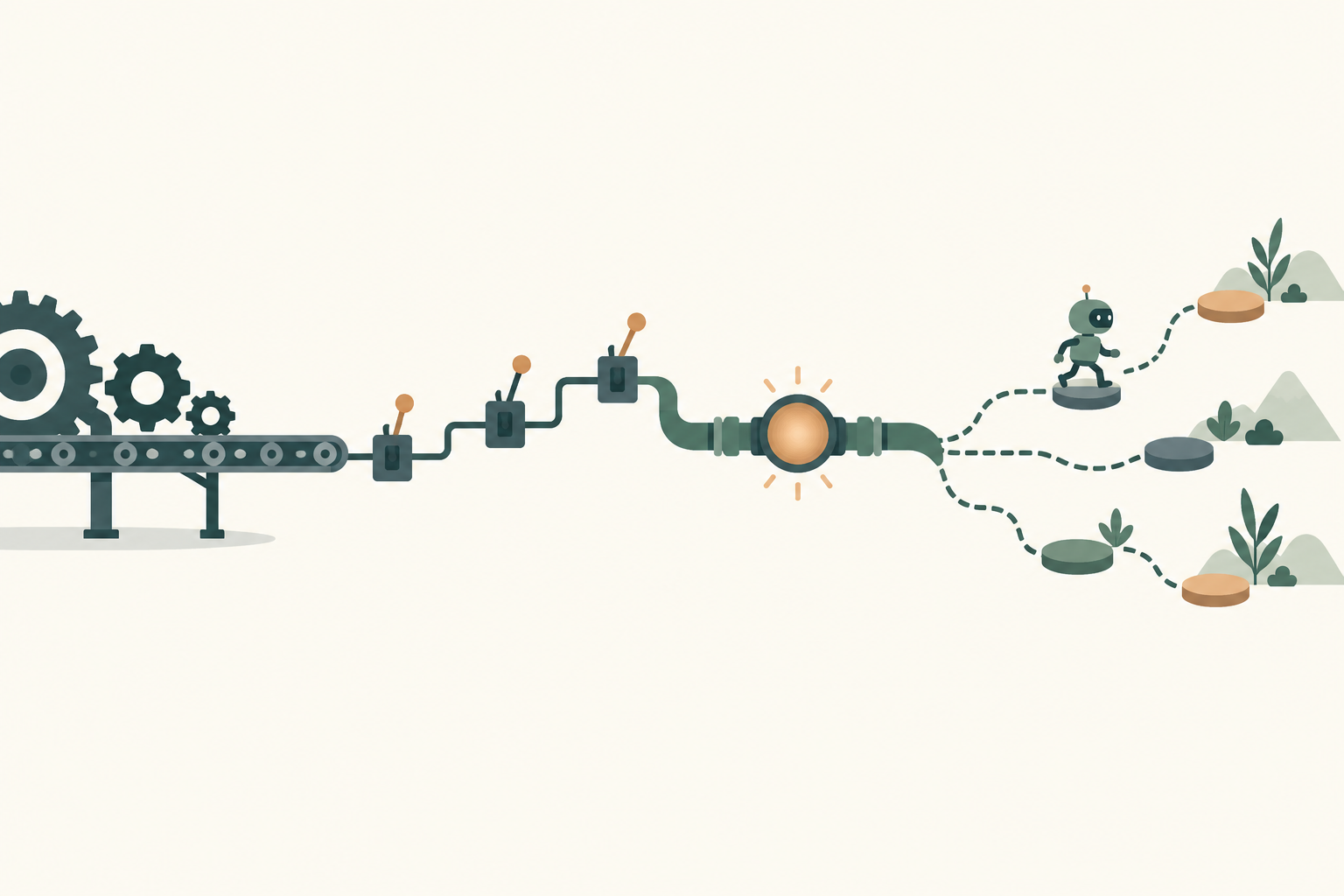
Each advertiser-facing agent Google and Meta have documented so far, as of November 2026, asks for the advertiser's approval before it changes an account. That is the most useful fact in this debate, because the companies with the most data on what their models get wrong have both chosen the same guardrail.
Google's Ask Advisor, the Gemini-based Google Ads AI agent built into the account, is in beta and can generate performance reports, explain why clicks or conversions dropped, troubleshoot policy violations, suggest keywords and creatives, and update campaign settings such as pausing a campaign, changing targeted locations or changing a daily budget, and the help page says it implements suggested changes "with your approval" (Google Ads Help, Ask Advisor in Google Ads (beta)). It isn't available in manager (MCC) accounts yet. Google's April 2026 post on Ads Advisor, the product Ask Advisor grew out of, put the rule in one line: "As always, Ads Advisor will ask for approval before taking action in your account" (Google, April 2026).
Meta announced on October 6, 2026 that the Meta AI business assistant in Ads Manager will soon plan and create campaigns, update targeting or change a budget from a conversational prompt, and framed the control model as "Previews, approvals, and controls let you decide what to hand off and what to own." The same post said its Ads MCP server, which brings campaign workflows into third-party AI tools, now supports more workflows for large advertisers and agencies, and that "Every action is gated behind advertiser-set permissions and explicit approval before anything goes live" (Meta for Business, Advertising Week New York 2026).
So when a vendor tells you their agent runs your Google Ads account unattended, the honest comparison is that Google's own agent, built on Google's own data, does not. For the detail on connecting an AI client to Google Ads through these routes, the sibling article on Google Ads MCP walks through them.
LinkedIn and Microsoft Ads, two other platforms many B2B paid teams run, have documented less, and what they have documented stops short of an agent. Microsoft's Advertising MCP server moved to an open pilot on June 17, 2026 "with read-only access", in Microsoft's words (Microsoft Advertising, June 2026), and its August 2026 product news still described it as "available with read-only access through open flight" (Microsoft Advertising, August 2026). The use cases Microsoft lists for it are reporting, asset review, anomaly detection, change history for the last 180 days and a side-by-side comparison with Google Ads, with no create or edit scenario on the page (Microsoft Learn, MCP server use cases), so an AI client on it sits in the read band whether you like it or not. Copilot in Microsoft Advertising, on its product page, offers recommendations advertisers "can use as a starting point and refine", and the page describes no step where it changes a live campaign on its own (Microsoft Advertising, Copilot).
LinkedIn's own MCP server for ad accounts, which reads and writes, is in beta and already in use as of November 2026, but LinkedIn hasn't documented it publicly and its Marketing API changelog for 2026 doesn't list it (LinkedIn Marketing API, recent changes). What LinkedIn does document is AI inside the ad creation window: Draft with AI writes a first draft, and the AI ad variants feature creates "three ad variations in the same ad set" that you can "view, edit, or remove" before anything runs (LinkedIn Help, create single image ads). Third-party agents reach LinkedIn through the Marketing API, so on LinkedIn the approval ladder is yours to build. The three bands in the next section apply on both platforms all the same, and the sibling article on LinkedIn Ads MCP covers the routes.
Paid media tasks AI marketing agents can run, sorted by what a mistake costs
Sort what AI agents for paid media can do by the cost of being wrong, because that cost decides how much autonomy each task can carry. Three bands cover almost everything a PPC team does.
| Band | What the agent does | Examples in a paid media team | How much autonomy is realistic as of November 2026 |
|---|---|---|---|
| Read and analyze | Pulls data, finds patterns, explains changes | Weekly performance summary, search term review, anomaly explanation, competitor ad monitoring, pacing checks | Full autonomy. A wrong answer costs a few minutes of reading. |
| Draft and propose | Produces something a person will edit or approve | Ad copy variants, negative keyword lists, audience suggestions, campaign structure for a new launch, a media plan draft | Full autonomy to draft, human approval to publish. |
| Change the account | Writes to live campaigns | Pause or enable, add negatives, change bids or budgets, launch a campaign, change targeting | Approval per change at first; narrow, reversible changes can graduate to auto-apply; spend changes stay with a person. |
The read band is the one to start with, and it already covers most of the hours a team loses. Rooijmans' negative keyword example shows why: a human reviews only the top-spending search terms, hundreds of new terms arrive every day, and the long tail of waste slips through. An agent that reads intent across every term and writes its judgment to a sheet can be wrong without costing anything but your attention. The draft band works the same way for creative and planning time, and our sibling piece on mapping your paid team's workflows for AI covers how to find these steps in your own process.
The change band is the one everybody argues about, and the table is deliberately conservative on it. Even here, the technical plumbing pushes toward approval. Google's open-source Google Ads MCP server exposes read tools (search, list_accessible_customers, get_resource_metadata) and only a handful of write tools (create_asset, upload_video_asset, manage_labels, manage_label_associations), and those writes use what the README calls a "Propose & Confirm" workflow, with a validation step, a dry run where supported, by default before a commit (googleads/google-ads-mcp on GitHub). There is no tool in it to change a bid or a budget. Meta's hosted server at mcp.facebook.com/ads goes further and can create and edit ads, ad sets and campaigns (Meta for Developers, Ads MCP server), behind the permission and approval gate Meta describes in the announcement quoted above.

Agents fail about half of realistic business tasks in the one public benchmark
The evidence that exists on agent reliability says you should not hand over spend decisions yet. The CRMArena-Pro benchmark, published in May 2025, tested leading LLM agents on realistic sales and service tasks inside a CRM, and found they achieved "only around 58% single-turn success", dropping to about 35% when the task needed several turns of conversation; the same agents scored over 83% on straightforward workflow execution (CRMArena-Pro, arXiv, May 2025). That split is the point. Agents are good at running a known procedure and much worse at the open-ended judgment a budget decision needs.
Nobody has published an equivalent benchmark for ad accounts, so we can't give you a failure rate for "agent changes a bid", and anyone who quotes one should be asked for the sample. What we do have is the direction of travel. Gartner's June 2025 forecast, as reported by PPC Land, was that over 40% of agentic AI projects will be canceled by the end of 2027 because of "escalating costs, unclear business value, and inadequate risk controls", while at least 15% of day-to-day work decisions will be made autonomously by 2028 (PPC Land, July 2025). Both halves fit paid media: the agent that reads and drafts will be normal, and the project that promised to run the account alone is the one that gets canceled.
Anthropic's guidance puts it in engineering terms: "The autonomous nature of agents means higher costs, and the potential for compounding errors" (Anthropic). A wrong negative keyword costs you one search term, and a wrong budget change at 6 pm, left running over a weekend, costs you the weekend.
Human approval stays on spend, launches and anything irreversible
A person should approve every agent action that changes spend, launches something new, or cannot be undone with one click. That is the line we'd draw for a paid media team today, and it maps closely to the rule in OpenAI's guide, which says actions that are "sensitive, irreversible, or have high stakes should trigger human oversight until confidence in the agent's reliability grows" (OpenAI).
In practice the list for a PPC account is short:
- Budget and bid changes, including target CPA and target ROAS adjustments, because they change what you spend tomorrow.
- Launching or enabling a campaign, because a paused draft is free and a live one is not.
- Account-level and campaign-level negative keywords, because a wrong one blocks traffic across everything below it.
- Audience and location changes on campaigns that drive pipeline, because the damage shows up in the CRM weeks later.
The approval doesn't have to be a person clicking yes forever. Rooijmans' negative keyword agent, as designed in his deck, works on a single confidence threshold: at 0% every suggestion goes to a sheet for human approval, at 75% the agent adds ad-group-level negatives on its own, at 85% it also flags campaign-level ones, and at 95% it adds campaign-level negatives while account-level still escalates. His phrase for it is that the agent earns autonomy (Rooijmans, SEM Stories 2026). We'd copy that shape for any write task: start with everything reviewed, widen the permission one band at a time, and never widen it for spend. The sibling article on where humans must stay in the loop on ad spend makes the fuller case.
A worked example of two teams and the same agent
Imagine two teams running the same search term agent on Google Ads accounts spending about $80,000 a month. This is a hypothetical, built to show the decision rather than to report a result.
Company A gives the agent a token that can write to the account, tells it to "reduce wasted spend", and lets it add negatives at every level from day one. In week three it adds "pricing" as a campaign-level negative on the brand campaign, because "pricing" searches had converted poorly in the data it could see. Demo requests from those searches, which turn into CRM opportunities three weeks later, disappear, and nobody connects the two until the pipeline review.
Company B runs the same agent read-only for a month. It writes every judgment to a sheet with a confidence score and a one-line reason, and the PPC lead spends twenty minutes a day approving. By the end of the month the pattern is visible: it treats anything with "cheap" or "pricing" as low intent. They fix the instruction, let it auto-add at ad-group level only, and keep approving campaign-level suggestions by hand. Both teams saved time, and only one still has its pricing traffic.
Set up an agent so you can test it, audit it and switch it off
An agent in a paid media account needs three things before it writes anything: a place to practice, a record of what it did, and a kill switch.
For practice, Google Ads API test accounts "can't serve ads or interact with your production accounts in any way", and their serving metrics such as impressions, conversions and cost are empty, so they prove the plumbing works but tell you nothing about judgment (Google Ads API documentation, test accounts). The read-only month in the example above is the judgment test, and you need both.
For the record, the Google Ads API change_event resource returns field-level changes with old and new values, the client type that made them and the user email where it's visible, for the past 30 days (Google Ads API documentation, change event). Give the agent its own user so its changes are separable from your team's, and pull that view into the weekly review. Meta's MCP server lists activity logs among its tool categories for the same reason.
For the switch, use the narrowest credential that does the job. Google's MCP README shows how to turn off the label and asset write tools in tools_config.yaml for a read-only deployment. Meta's minimum permissions are ads_mcp_management plus either ads_read or ads_management, and only Employee-role system user tokens work server to server (Meta for Developers, get started). Start with ads_read, because granting ads_management moves the agent into the change band, and that should be a decision someone writes down.
Where agents go wrong in paid media
Agents in a paid media team fail in a few repeatable ways, and most of them have nothing to do with the model.
The agent only sees what the platform sees. If your conversions are form fills and the real signal is a qualified opportunity in the CRM three weeks later, the agent optimizes toward the wrong thing with great confidence. Feed it the closed-loop data or keep it out of the change band. B2B AI agents running search accounts hit this hardest, because conversions there are few and arrive late. Our guide to AI agents for PPC sets out the jobs an agent can do well with little conversion data.
The task was a rule in disguise. If you can write the condition down, write a script. Rooijmans' sequence is scripts for the deterministic part first, then AI judgment, then autonomy, and OpenAI's guide says the same from the other side: if a use case doesn't clearly meet its criteria for an agent, "a deterministic solution may suffice".
Nobody owned the review, so the sheet the agent writes to fills up until someone turns the agent off. Put the twenty minutes in a named person's calendar before you turn it on, and review write permissions quarterly, because the agent that was allowed to change budgets during a launch sprint is still allowed to in month six.
The agent gets judged on hours saved alone. Hours are the easy number, and vendors lean on them because they're flattering. The number that matters for your CFO is whether cost per opportunity moved, and that needs the CRM join. The sibling piece on which paid media tasks to automate first is built around that ordering.
How Scalewell puts a paid team's first agents to work
Scalewell helps paid teams give agents the reading, analysis and drafting work at the cheap end of the list above, so specialists get those hours back for decisions that move spend. An audit of the team's week finds the recurring jobs and scores which one an agent should take on first.
The build sprint then puts the first agents to work, with a person approving anything that touches budget, as this guide recommends. Your paid media team tests each agent and says what to change. By the end, typically 8 to 12 weeks in, the people who use the agents can review and adjust them without Scalewell.
Where to start
Pick the one task your team complains about most, connect an agent to it read-only (Ask Advisor inside the account, an AI client on the Google Ads MCP server's read tools, Meta's server with ads_read only, or Microsoft's Advertising MCP server, which is read-only as it stands), and spend a month comparing its judgment against what actually reached the CRM before you grant it a single write permission. If you'd like help deciding which tasks to hand over first and how to set the approval ladder for your accounts, that is the kind of work Scalewell does with paid media teams.
Frequently asked questions
Can an AI agent manage Google Ads on its own?
Not as of November 2026, if you mean changing bids, budgets and campaigns without anyone approving. Google's own Ask Advisor applies changes only with your approval, and Google's open-source MCP server has no bid or budget write tools. Third-party agents can write through the API, but keep those writes approval-gated until you've compared their judgment against CRM outcomes.
What's the difference between an AI agent and a Google Ads script?
A script runs logic you wrote in advance on numbers the account already has, so it is predictable and cheap but can't read intent. An AI agent for PPC uses a language model to decide its own steps toward a goal, so it can judge a search term or a landing page, but it is less predictable and needs review.
How do I test an AI agent on Google Ads before it changes anything?
Run two tests, one for the plumbing and one for judgment. A Google Ads API test account proves the plumbing, but it can't serve ads and its cost and conversion data are empty, so it says nothing about judgment. For judgment, run the agent read-only on the live account for a month, have it write each call and its reason to a sheet, and compare those calls against what reached the CRM.
Do AI agents for marketing replace PPC specialists?
No, and the evidence so far shows why: agents are reliable on known procedures and weak on open-ended judgment, with success rates of about 35% on multi-turn business tasks in the CRMArena-Pro benchmark. The specialist's job shifts toward setting goals, reviewing the agent's calls and deciding what it may touch, which is more senior work, not less.